
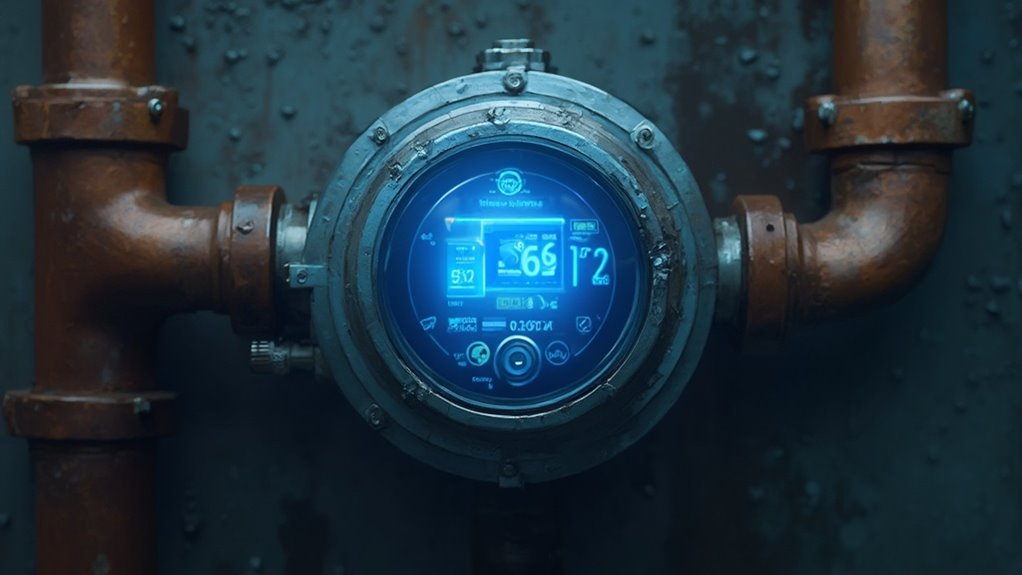
Smart water metres are revolutionising conservation by giving you real-time monitoring of your water usage through advanced sensor technology. You'll receive instant alerts about leaks, track consumption patterns, and make informed decisions that can save £432-720 annually. These devices help protect natural habitats by reducing strain on water sources, whilst their data analytics enable precise leak detection and smarter resource management. Discover how this innovative technology is transforming water conservation worldwide.
Understanding Smart Water Meter Technology
Whilst traditional water metres require manual readings, smart water metres represent a revolutionary advancement in monitoring household water consumption.
These devices are equipped with smart sensor technology that continuously tracks your water usage in real-time, sending data directly to your utility provider and your personal device.
These innovative metres utilise water data analytics to help you understand your consumption patterns.
You're able to detect leaks instantly, monitor peak usage times, and receive alerts when your water use exceeds normal patterns.
The technology transforms raw data into actionable insights, allowing you to make informed decisions about your water consumption.
You can view detailed reports showing hourly, daily, or monthly usage trends, helping you to identify opportunities to conserve water and reduce your environmental impact.
Real-Time Water Usage Monitoring Benefits
The ability to monitor water usage in real-time brings numerous practical advantages to homeowners and utilities alike. One receives immediate alerts about potential leaks, allowing issues to be addressed before they become costly problems.
By tracking consumption patterns throughout the day, one can adjust habits and implement effective conservation strategies. Smart metres help one understand exactly when and where the most water is being used, empowering households to make informed decisions about their usage.
One sees the impact of conservation efforts instantly, whether it's shortening shower times or adjusting irrigation schedules. Real-time data also enables utilities to detect system-wide leaks faster and manage water resources more efficiently.
This technology creates a stronger connection between daily choices and their environmental impact, making water conservation more tangible and achievable.
Data-Driven Leak Detection Systems
Modern data-driven leak detection systems revolutionise how we identify and prevent water waste in homes and infrastructure. Through advanced data analytics, you'll discover hidden leaks before they cause significant damage or waste precious water resources.
- Your smart metre continuously monitors flow patterns, instantly alerting you to unusual water usage that might indicate a leak.
- Data analytics algorithms learn your household's typical consumption patterns, making leak detection increasingly accurate over time.
- You'll receive immediate notifications when the system detects drips, pipe bursts, or underground leaks.
- Smart metres can pinpoint leak locations with remarkable precision, saving time and resources during repairs.
When you embrace this technology, you're not just protecting your home – you're contributing to water conservation efforts whilst potentially saving thousands of litres annually through early leak detection and swift repairs.
Cost Savings Through Smart Metering
Significant cost savings await households that implement smart water metering technology. You will discover immediate benefits through detailed cost analysis of your water usage patterns, helping you make informed decisions about consumption. Smart metres provide financial incentives by identifying wasteful habits and optimising your water use during off-peak hours.
| Savings Category | Monthly Impact | Annual Benefit |
|---|---|---|
| Leak Detection | £12-20 | £144-240 |
| Peak Usage | £8-16 | £96-192 |
| Consumption | £16-24 | £192-288 |
| Total Potential | £36-60 | £432-720 |
Your investment in smart metering typically pays for itself within 12-18 months. The technology empowers you to track real-time usage, receive instant alerts about unusual consumption, and adjust your habits accordingly. You will join a growing community of water-conscious consumers whilst protecting your wallet and our planet's precious resources.
Environmental Impact of Smart Water Meters
Whilst traditional water metres simply record usage, smart water metres drive substantial environmental benefits through data-driven conservation. One discovers that these devices help adopt better conservation practices by providing real-time insights into water consumption patterns.
Smart metres contribute to environmental protection in several key ways:
- They reduce water pollution by helping utilities quickly detect and fix system leaks that could contaminate groundwater.
- They lower energy usage since less water needs to be treated and pumped through the system.
- They protect natural habitats by decreasing the strain on rivers, lakes and aquifers.
- They minimise chemical usage in water treatment facilities due to optimised consumption.
Integration With Smart Home Ecosystems
Smart water metres seamlessly connect with existing home automation systems, allowing you to monitor and manage water usage through popular platforms like Apple HomeKit, Google Home, and Amazon Alexa.
Through smart home integration, you'll receive real-time alerts about water consumption patterns, potential leaks, and abnormal usage right on your smartphone or tablet.
Your automated water management system can trigger specific actions based on preset conditions. For instance, you can programme your system to automatically shut off the water supply if it detects a significant leak or when usage exceeds your daily threshold.
You'll also gain valuable insights through detailed analytics and customisable reports, helping you make informed decisions about your water consumption.
This interconnected approach transforms your relationship with water usage, making conservation both effortless and engaging.
Installation and Maintenance Requirements
Installing a smart water metre requires three key components: a qualified plumber, proper permits from your local water authority, and compliance with regional building regulations.
The installation process typically takes 2-4 hours, during which your water service will be temporarily suspended.
To guarantee your smart metre functions at peak performance, you'll need to follow these maintenance protocols:
- Clean the metre's external housing quarterly to prevent debris build-up
- Check the digital display monthly for error codes or unusual readings
- Replace the battery every 3-5 years, depending on your model
- Schedule professional calibration annually to maintain accuracy
You'll receive notifications through your smart metre app when it's time for routine maintenance.
Smart Meter Security Features
Because protecting your water usage data is paramount, modern smart metres come equipped with multiple layers of security safeguards.
You'll find robust encryption protocols that shield your information during transmission between the metre and utility company's servers, making it virtually impossible for unauthorised parties to intercept your data.
Your smart metre's user authentication system guarantees that only you and authorised utility personnel can access your consumption details.
You're protected by secure login credentials, and some advanced models even offer two-factor authentication for additional safety.
The metres also feature tamper-detection mechanisms that alert utility companies if someone attempts physical interference.
These security measures work together to safeguard your privacy whilst still allowing you to monitor your water usage effectively and make informed conservation decisions.
Future Developments in Water Metering
While current smart metre security features set high standards, the next wave of water metering technology promises even more innovative advancements.
You'll soon see emerging technologies transform how you interact with your water consumption data, as regulatory frameworks evolve to support these changes.
Key developments you'll experience include:
- Artificial intelligence that predicts your household's water needs and automatically adjusts flow rates
- Quantum sensors that detect microscopic leaks before they become costly problems
- Blockchain integration for transparent, tamper-proof water trading amongst communities
- Biomimetic designs that draw inspiration from nature's water management systems
These innovations will help you become an active participant in water conservation.
You'll gain unprecedented control over your water usage whilst contributing to your community's sustainability goals.
The future of water metering isn't just about measurement—it's about empowerment through technology.
Success Stories and Implementation Cases
Smart metre implementation projects around the globe have demonstrated remarkable success in reducing water waste and promoting conservation. One finds inspiring examples in cities where community engagement and strong policy frameworks have led to significant water savings.
| City | Water Savings | Key Success Factor |
|---|---|---|
| Singapore | 20% reduction | Real-time leak detection |
| Barcelona | 15% decrease | Community education |
| Melbourne | 30% savings | Smart irrigation alerts |
| Tokyo | 25% reduction | Behavioural feedback |
These success stories showcase how smart metres have transformed water management. In Singapore, households save thousands of litres annually through instant leak notifications. Barcelona's thorough community engagement programme has helped residents understand their consumption patterns, whilst Melbourne's smart irrigation system has revolutionised outdoor water use. Through these implementations, one witnesses a global shift towards sustainable water management.
Frequently asked questions
Can Smart Meters Work During Power Outages or in Areas With Poor Connectivity?
Most smart metres have built-in power management systems with backup batteries. They store data locally during outages, and many utilise multiple connectivity solutions like cellular, radio, or mesh networks for reliable operation.
How Long Does the Battery Life of a Smart Water Meter Last?
The battery life of a smart water metre typically lasts 10-15 years, depending on its maintenance requirements and usage patterns. Modern units optimise battery longevity through efficient power management and durable components.
Are There Any Health Concerns Associated With Smart Water Meter Signals?
You needn't worry about health risks from smart water metres, as they emit extremely low-level radio signals. Your exposure is minimal since they transmit briefly and the signal strength is weaker than your mobile phone.
Can Tenants Access Smart Meter Data in Rental Properties?
Access to water usage data as a tenant is possible, though data accessibility often depends upon your landlord's policies. Enquire about tenant privacy rights and request direct access to your smart metre readings.
Do Smart Meters Work With Well Water Systems or Only Municipal Supplies?
Smart metres can be installed on your well water system to enjoy the same monitoring benefits as municipal supplies. They will track your well's performance, detect leaks, and help conserve your precious groundwater resources.