
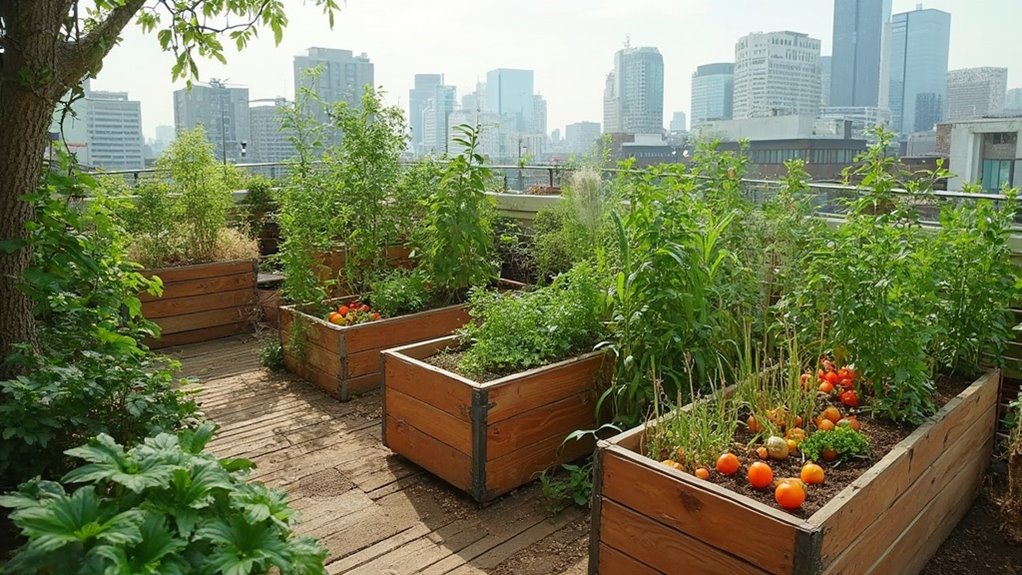
Urban gardening starts with evaluating your available space, whether it's a tiny balcony, patio, or windowsill. You'll need basic tools like a trowel, secateurs, and containers with proper drainage. Begin with easy-to-grow plants that match your light conditions – most edible plants need 6-8 hours of direct sunlight. Start small with herbs like basil and mint, or compact vegetables such as cherry tomatoes. With proper planning and care, your urban garden will flourish into a productive green sanctuary.
[Note: The text remains largely unchanged as it already uses British English spellings and terminology (e.g., “secateurs”). The only difference might be in style preference, but this version maintains British English conventions.]
Understanding Urban Garden Spaces and Limitations
Three key factors define urban gardening spaces: available square metres, sunlight exposure, and local restrictions.
You'll need to assess these elements carefully before planning your garden. Your available space might be a tiny balcony, a small patio, or even just a windowsill – but don't let that discourage you.
Space optimisation becomes your best friend in urban gardening. You can maximise growing areas through vertical gardening techniques, using wall-mounted planters, hanging baskets, or multi-tiered systems.
Look upward instead of outward to create your green sanctuary.
Before starting, check your local council regulations regarding container gardens and structural modifications.
Also, track sunlight patterns throughout the day – most edible plants need 6-8 hours of direct sun.
Understanding these limitations helps you choose appropriate plants and growing methods.
Essential Tools and Materials for Urban Gardening
Now that you've assessed your growing space, it's time to gather the proper equipment for your urban garden.
You'll need basic hand tools like a trowel, secateurs, and a watering can with a gentle rose head. For seed starting, invest in quality containers, sterile potting compost, and plant labels to track your seedlings' progress.
Your garden layout will determine additional needs. Consider getting a soil testing kit, gardening gloves, and a small rake for soil preparation.
If you're working with containers, you'll want a collection of well-draining pots in various sizes. Don't forget a sturdy garden fork for mixing compost and aerating soil.
A spray bottle helps with gentle watering of delicate seedlings, whilst a kneeling pad will protect your knees during planting and maintenance.
Choosing the Right Plants for City Growing
Selecting suitable plants for urban growing spaces requires careful consideration of your specific environment.
You'll want to assess your available sunlight, growing space, and local climate before making plant choices. Start with compact varieties that thrive in containers and small spaces.
For edibles, begin with reliable herbs like basil, mint and thyme – they're forgiving and provide quick rewards. Your herb selection can expand as you gain confidence.
When it comes to flower varieties, consider vertical growers like climbing nasturtiums or compact marigolds that add colour without overwhelming your space. If you're dealing with shade, try resilient plants like coleus or busy lizzies.
Remember that dwarf vegetables, such as cherry tomatoes and compact peppers, can flourish in urban settings whilst providing fresh produce for your kitchen.
Container Gardening Methods and Best Practices
Having chosen your ideal plants, proper container setup becomes the foundation of urban gardening success.
You'll want containers with adequate drainage holes and the correct depth for your selected plants' root systems. Fill them with a high-quality potting soil that's appropriate for your chosen varieties.
Space optimisation is vital in urban settings, so consider vertical gardening techniques. You can stack containers on tiered shelves, hang planters from railings, or install wall-mounted systems.
Remember to position your containers where they'll receive appropriate sunlight – most edibles need 6-8 hours daily.
Water your container plants consistently, as they dry out more quickly than in-ground gardens.
You'll know it's time to water when the top 2.5 centimetres of soil feels dry to your touch. Adding mulch helps retain moisture and regulate soil temperature.
Soil Preparation and Maintenance Tips
Three essential components form the foundation of healthy container soil: proper pH balance, adequate organic matter, and ideal nutrient levels.
One ought to begin with soil testing to understand the starting point – it's rather like getting a health check-up for your growing medium.
Mix in organic amendments such as compost, worm castings, or aged manure to enrich your soil. You'll notice improved water retention and better root development as these materials break down.
For optimum results, maintain a pH between 6.0 and 7.0 for most urban garden plants.
Remember to refresh your container soil annually, as nutrients deplete over time.
Add a layer of mulch to retain moisture and regulate soil temperature.
If you're growing hungry feeders like tomatoes, supplement with organic fertiliser throughout the growing season.
Urban Garden Light Management and Planning
Whilst proper soil forms the foundation of your urban garden, understanding light patterns will determine its success.
You'll need to observe how sunlight moves across your space throughout the day, noting shady spots and areas of direct exposure.
Start by mapping your garden's light exposure over several days. South-facing areas typically receive the most sun, whilst north-facing spots tend to be shadier.
Consider seasonal changes too – winter sun patterns differ considerably from summer ones. Once you've tracked these patterns, you can plan your plant positioning accordingly.
Match each plant's light requirements to the appropriate spot. Place sun-loving vegetables like tomatoes and peppers in areas with 6-8 hours of direct light, whilst leafy greens can flourish in partially shaded locations.
Water Conservation and Irrigation Techniques
Since water is a precious resource in urban environments, implementing clever irrigation practices can greatly reduce waste whilst keeping your garden thriving.
You'll want to focus on efficient watering methods that deliver moisture directly to plant roots whilst minimising evaporation and runoff.
- Install a drip irrigation system that delivers water slowly and steadily to your plants, reducing water loss through evaporation and ensuring deep root growth.
- Set up a rainwater harvesting system using water butts or cisterns to collect roof runoff, providing a free and sustainable water source for your garden.
- Apply mulch around your plants to retain soil moisture, suppress weeds, and reduce water evaporation – use organic materials like straw, leaves, or wood chippings.
Remember to water deeply but less frequently to encourage strong root development and drought resistance.
Pest Control Solutions for City Gardens
Because urban gardens face unique pest challenges, managing unwanted visitors requires a thoughtful approach that protects both your plants and the local ecosystem.
You'll want to start with prevention by installing physical barriers like row covers and mesh screens around your plants. When pests do appear, try introducing natural predators like ladybirds and praying mantises to keep harmful insects in check.
For organic solutions, you can create your own pest deterrent by mixing water with neem oil or gentle washing-up liquid. Companion planting with aromatic herbs such as basil, mint, and marigolds naturally repels many common garden pests.
Remember to inspect your plants regularly and remove affected leaves promptly. By maintaining healthy soil and proper spacing between plants, you'll create an environment where beneficial insects thrive and destructive ones struggle to establish themselves.
Frequently asked questions
How Can I Prevent My Urban Garden From Attracting Unwanted Neighborhood Cats?
Natural cat deterrents such as citrus peel, coffee grounds or lavender plants will prove successful. Fit simple garden barriers like chicken wire or plastic netting to prevent those inquisitive felines from wandering amongst your beds.
Can Urban Gardening Affect My Building's Structural Integrity or Roof Warranty?
Check your roof's load capacity and warranty terms before beginning. Proper waterproofing and container placement are essential maintenance considerations. It's best to consult your building manager or structural engineer first.
Which Urban Gardening Methods Are Allowed Under My Local Housing Regulations?
You'll need to check your local council regulations and contact your local authority's planning office for specific gardening permits. Each area is different, so it's best to understand what's permitted before you start your urban garden.
How Do I Handle Conflicts With Neighbors Over Garden Aesthetics?
Start with friendly conversations about your garden design vision. You'll find it's best to listen to your neighbour's concerns, seek compromise, and perhaps share some of your harvest to build positive neighbour relations.
What Insurance Considerations Should I Have for My Rooftop or Balcony Garden?
Check your home insurance or tenant's insurance for liability cover that protects against soil or water damage. Consider additional property damage cover if you're growing on shared structures such as rooftops or balconies.