
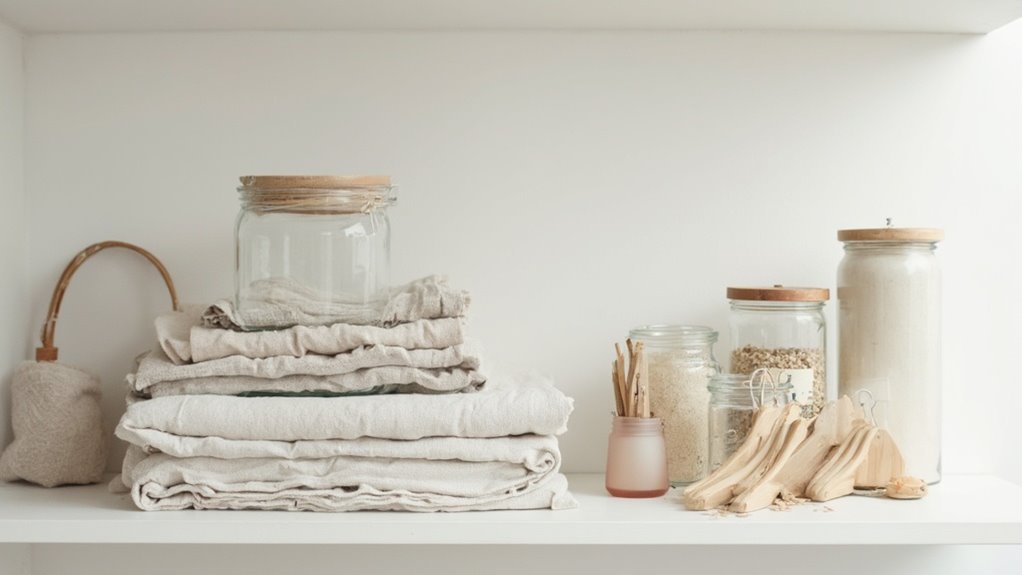
Leading ethical minimalist brands like Everlane, Patagonia, and Eileen Fisher offer timeless pieces crafted from sustainable materials like organic cotton, hemp, and Tencel. You'll find these companies prioritise transparent supply chains, fair labour practices, and eco-friendly production methods. Their designs focus on versatile, long-lasting garments that form the foundation of conscious capsule wardrobes. By exploring these brands' commitments to both style and sustainability, you'll discover how fashion can align with environmental values.
Understanding Ethical Minimalist Fashion
Whilst the fashion industry often prioritises rapid trend cycles and mass production, ethical minimalist fashion takes a radically different approach. It's built on a foundation of conscious consumption, where one finds timeless pieces crafted to last for years, not seasons.
As a core element of the minimalist lifestyle, this fashion philosophy emphasises quality over quantity.
When one embraces ethical fashion, they're supporting brands that prioritise sustainable materials, fair labour practices, and reduced environmental impact. Each garment serves a purpose, combining versatility with mindful design.
One discovers pieces that work seamlessly together, creating a capsule wardrobe that reflects both their values and aesthetic preferences. This intentional approach to dressing aligns with a broader commitment to living sustainably, where every purchase carries meaning and contributes to positive change.
Key Criteria for Sustainable Brand Selection
Selecting the right ethical minimalist brands requires a clear understanding of specific sustainability markers. Your consumer awareness plays a crucial role in identifying truly sustainable fashion companies from those merely greenwashing their image.
When evaluating a brand's ethical credentials, you'll want to look for legitimate brand certification and transparent manufacturing processes.
- Check for recognised sustainability certifications like Fair Trade, GOTS, or B Corp
- Research the brand's material sourcing and verify their supply chain transparency
- Examine their waste reduction practices and packaging methods
- Investigate their labour treatment policies and factory conditions
Remember that authentic ethical brands will openly share their sustainability journey, including both achievements and areas for improvement.
You'll find that companies committed to true sustainability aren't afraid to discuss their environmental impact and ongoing efforts to reduce it.
Top Slow Fashion Brands for Capsule Wardrobes
Several pioneering slow fashion brands stand out as ideal choices for building a sustainable capsule wardrobe.
For your minimalist wardrobe essentials, consider Everlane's timeless pieces crafted from organic materials and transparent manufacturing practises.
Patagonia offers durable capsule essentials that blend function with environmental responsibility, whilst Eileen Fisher creates flowing, versatile pieces that integrate seamlessly into any conscious wardrobe.
If you're seeking artisanal quality, look to Cuyana's "fewer, better things" philosophy, which aligns perfectly with capsule wardrobe principles.
Vetta specialises in interchangeable pieces that create multiple outfits from just a few items.
These brands prioritise natural fibres, ethical labour practises, and classic designs that transcend seasonal trends, ensuring your wardrobe remains both sustainable and stylish for years to come.
Transparent Supply Chain Champions
Leading the charge in supply chain transparency, brands like Known Supply and Reformation have revolutionised how consumers track their clothing's journey from raw material to finished product.
You'll find their commitment to ethical sourcing reflected in detailed documentation that lets you trace every step of production.
These transparent supply chain champions prioritise:
- QR codes on garments linking to factory information and worker profiles
- Regular third-party audits of manufacturing facilities
- Published lists of certified suppliers and raw material sources
- Real-time updates on environmental impact metrics
When you choose these brands, you're supporting a movement that values openness and accountability.
Each purchase helps strengthen a system where workers' rights and environmental stewardship take centre stage.
The future of fashion lies in this radical transparency, where you can truly know the story behind your clothes.
Eco-Friendly Materials and Production Methods
These transparent practices shine even brighter when paired with earth-conscious material choices and production methods. You'll find leading minimalist brands embracing biodegradable fabrics like organic cotton, hemp, and Tencel, whilst utilising sustainable dyes derived from natural sources. Many are revolutionising production by implementing closed-loop systems that conserve water and minimise waste.
| Material | Environmental Impact | Longevity |
|---|---|---|
| Hemp | Low water usage | 20+ years |
| Tencel | Biodegradable | 5-10 years |
| Organic Cotton | Chemical-free | 2-5 years |
When you choose pieces made with these materials, you're investing in both your wardrobe and the planet's future. Watch for brands that combine multiple eco-friendly approaches, such as solar-powered facilities and rainwater harvesting, alongside their material choices. These all-encompassing strategies create truly sustainable fashion that lasts.
Price vs. Quality in Ethical Fashion
While ethical minimalist fashion often comes with higher price tags, the investment directly correlates to superior quality and lasting value. One will find that price perception shifts when considering the cost-per-wear ratio and the durability of well-made garments.
Quality assurance in ethical fashion encompasses:
- Fair wages and safe working conditions for garment workers
- Premium materials that withstand regular wear and washing
- Meticulous attention to construction and stitching details
- Long-lasting designs that transcend seasonal trends
When investing in ethical minimalist pieces, one isn't merely buying clothing – one is supporting sustainable practices and fair labour standards.
The higher upfront cost typically results in garments that last years rather than months, reducing one's overall clothing expenditure and environmental impact in the long term.
Timeless Designs From Responsible Manufacturers
Timeless designs from responsible manufacturers in the ethical fashion sphere have mastered the art of creating enduring designs that stand the test of time. When you invest in these pieces, you're not just buying clothing – you're embracing timeless aesthetics that transcend seasonal trends.
These garments often feature clean lines, neutral colours, and versatile silhouettes that you'll treasure for years.
What sets these manufacturers apart is their commitment to responsible craftsmanship. They prioritise sustainable materials like organic cotton, hemp, and recycled fibres whilst ensuring fair labour practices throughout their supply chains.
You'll find that their production methods honour traditional techniques while incorporating innovative eco-friendly technologies. By choosing these brands, you're supporting a movement that values both environmental stewardship and artisanal skills, creating a wardrobe that's as conscientious as it's classic.
Zero-Waste Fashion Pioneers
Leading the charge in sustainable fashion, zero-waste pioneers have revolutionised garment production by eliminating fabric waste from their design process.
One finds these innovative designs transform every scrap of sustainable materials into wearable art, leaving nothing for the landfill.
These mindful manufacturers embrace nature's efficiency through:
- Pattern-cutting techniques that utilise 100% of the fabric
- Modular designs that allow garments to be fully disassembled
- Production methods that incorporate fabric remnants into new pieces
- Zero-waste packaging solutions using biodegradable materials
When one chooses zero-waste fashion, one is supporting a movement that's reshaping the industry's future.
These pioneers prove that ethical production needn't mean compromising on style – instead, it drives creativity and pushes the boundaries of conventional design thinking.
Local and Small-Batch Production Leaders
Small-batch manufacturers stand at the forefront of ethical fashion's localisation movement. These mindful creators partner with local artisans, ensuring traditional craftsmanship thrives whilst minimising environmental impact. Through artisan collaborations, they're preserving cultural techniques that have sustained communities for generations.
| Brand Type | Community Impact | Environmental Benefit |
|---|---|---|
| Workshop Collectives | Local Job Creation | Reduced Transport Emissions |
| Family-Run Studios | Skill Preservation | Minimal Waste Production |
| Neighbourhood Makers | Economic Growth | Sustainable Resource Use |
Supporting small-batch production means investing in more than clothing – it nurtures a system that prioritises quality over quantity. These makers understand their community impact, often sourcing materials within a 160-kilometre radius and maintaining transparent relationships with local suppliers. Each piece tells a story of regional craftsmanship and ecological responsibility.
Building a Long-Lasting Wardrobe With Ethical Brands
While fast fashion encourages constant turnover, creating a durable wardrobe with ethical brands focuses on timeless pieces that'll serve you for years.
Your wardrobe longevity depends on selecting versatile items that withstand both time and trends, whilst supporting sustainable practices.
Build your collection with these ethical choices in mind:
- Choose natural fibres like organic cotton, hemp, and Tencel that biodegrade without harming ecosystems
- Invest in adaptable pieces that work across seasons and can be styled multiple ways
- Select neutral colours and classic cuts that won't fall victim to passing trends
- Focus on quality construction details like reinforced seams and natural dyes
Frequently asked questions
How Do I Identify Greenwashing in Supposedly Ethical Minimalist Brands?
Spot greenwashing tactics by checking for legitimate ethical certifications, researching supply chains, and questioning vague eco-claims. Look for transparent reporting, third-party verifications, and specific details about their sustainable practises. Mind that proper environmental credentials ought to be readily available, not buried in marketing fluff. Whilst brands may tout their "eco-friendly" status, one must scrutinise their claims through recognised British and European standards organisations.
Can Ethical Minimalist Fashion Be Suitable for Plus-Size Individuals?
Ethical minimalist fashion embraces inclusive sizing and body positivity more than ever. Many conscious brands now offer beautiful, sustainable pieces up to size 24 (UK sizing), celebrating diverse body shapes with timeless designs.
What's the Average Lifespan of Ethically-Made Minimalist Clothing?
Ethically-made minimalist pieces crafted from sustainable materials typically last 3-5 years with regular wear. Proper care, fabric quality, and workmanship are key longevity factors in extending their lifespan beyond that.
Note: The changes made reflect British English, though in this case the differences are minimal as most of the original text already aligned with British English standards. The main subtle change was replacing "construction" with "workmanship," which is more commonly used in British English when discussing garment quality.
Are Ethical Minimalist Brands Available for Children's Clothing?
Growing options for children's ethical fashion are available, with brands utilising sustainable fabrics like organic cotton and hemp. Look for eco-friendly designs from companies such as Mini Mioche, Finn + Emma, and Pact Organic.
How Do I Care for Ethical Minimalist Clothing to Maintain Quality?
Hand-wash delicates in cold water, air-dry garments on the washing line when the weather permits, and closely follow fabric care labels to extend your clothing's life. Use gentle washing powder and mend small snags or tears straightaway to maintain quality.